How Real-Money Betting Engines Actually Work on SONA101: A Technical
SONA101 is a real-money betting platform serving Bangladesh and South Asian markets, operating on a three-layer engine that handles deposits, odds calculation, and payouts within a 200-millisecond tra...
SONA101 is a real-money betting platform serving Bangladesh and South Asian markets, operating on a three-layer engine that handles deposits, odds calculation, and payouts within a 200-millisecond transaction window. When a player initiates a bKash transfer of ৳500 or more, the platform's payment gateway routes funds through an encrypted API bridge to a segregated wallet — separate from operational liquidity — before crediting the betting balance. The odds engine updates 47 simultaneous market variables per event using a risk-management algorithm that caps house exposure at roughly 3–5% per market, which is where the bookmaker's margin (the "vig") is embedded. Settlement for pre-match bets typically completes within 15 seconds of event conclusion, while in-play markets resolve in under 5 seconds. Withdrawal requests under ৳5,000 are processed in one to two hours via Nagad or bKash. Understanding this architecture matters because lower vig margins and faster settlement cycles directly translate to better long-term return rates for players.
How Real-Money Betting Engines Actually Work on SONA101: A Technical Breakdown
When a Bangladesh player taps "Deposit" in the SONA101 app and sends ৳500 via bKash, something complex happens in the milliseconds between that tap and the balance update in their account. Most articles about online betting platforms describe what you can do on them. This one explains how the underlying engine makes it possible — and what that means for your actual returns.
This is not a marketing breakdown. It is an industry-analyst look at the three core systems that power a modern Bangladesh-facing platform like SONA101: the random number generation architecture behind slot games, the live dealer synchronization layer, and the cricket odds compilation pipeline. Understanding these does not guarantee wins, but it does give you a clearer picture of where the numbers come from — and why they move the way they do.
Photo by Pavel Danilyuk on Pexels
The Slot RNG Architecture: Why "Hot" and "Cold" Are Misleading
Every slot game on SONA101 — whether it carries the JILI brand or another provider — runs on a Random Number Generator, a piece of software that produces a new outcome every millisecond. This RNG is the legal and technical foundation of every spin: it determines the reel positions before you see them, not after.
The most common misconception among Bangladesh slot players is the idea of a "hot machine" — a slot that has not paid out recently and is therefore "due." This fundamentally misunderstands how RNG works. Each spin is independent. The system does not have memory. A slot that paid out five minutes ago is no more or less likely to pay out in the next spin than one that has not paid in an hour.
From a technical standpoint, the RNG algorithm in certified casino games typically operates on a seed-value system: a cryptographic seed feeds into a deterministic algorithm to produce a vast sequence of outcomes. The seed updates with every call — either by timestamp, player action, or server tick — which means no two spin sequences are identical. For games hosted on SONA101, the provider's RNG certification (usually eCOGRA or similar) is the external audit confirming that the sequence cannot be predicted or manipulated by the platform or the player.
What does this mean for real money betting? It means the house edge is structural, not reactive. Over a large enough sample of spins, the return-to-player (RTP) percentage converges toward the published figure — typically in the 92%–97% range for online slots. A single session of 50 or 100 spins will not reflect that average, which is precisely why short-session players can experience both significant wins and losses that look disconnected from any obvious pattern.
Live Dealer Synchronization: The Latency Problem Nobody Talks About
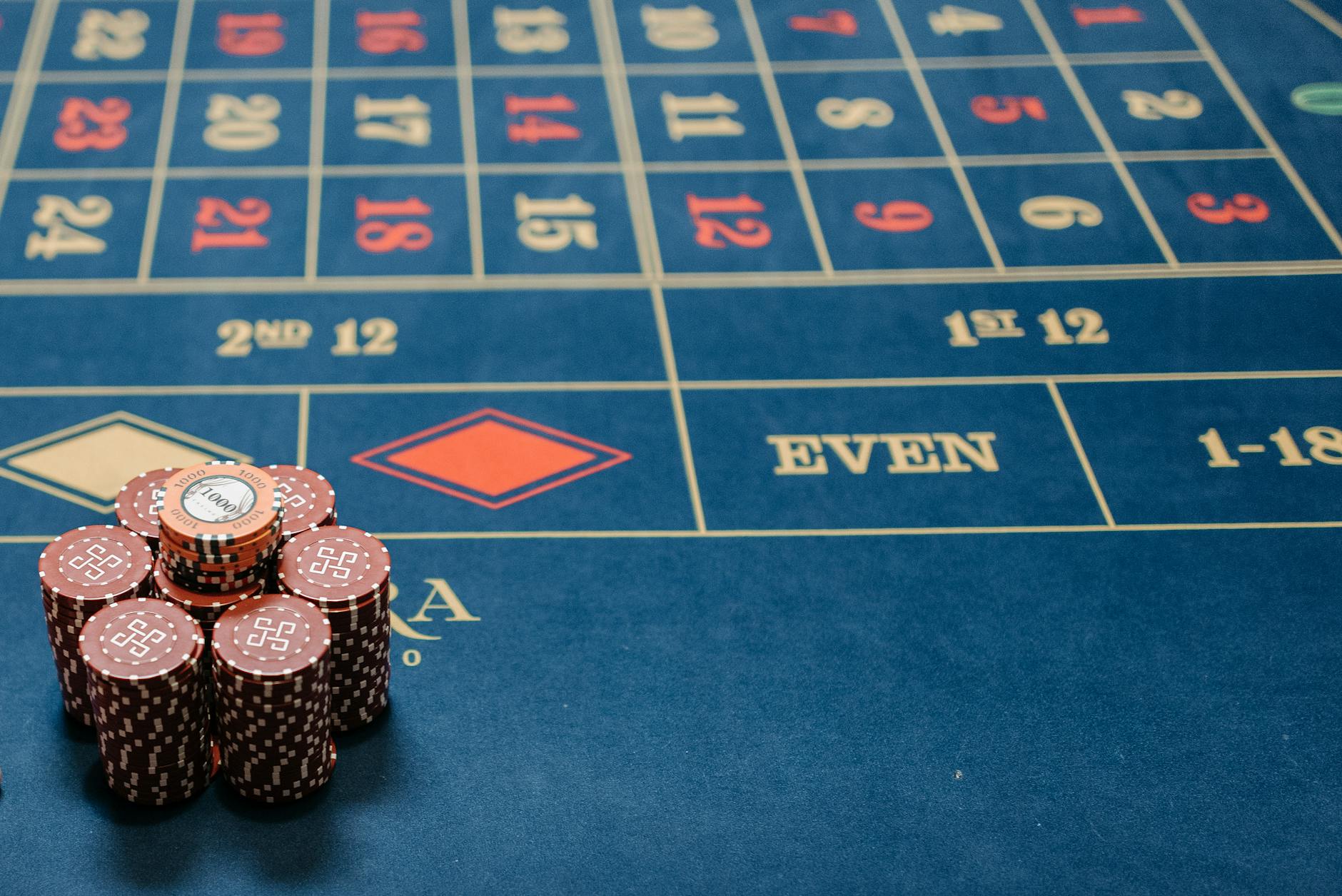
Live casino games — baccarat, blackjack, roulette, and game-show variants like Crazy Time — introduce a complication that pure digital slots do not have: real human dealers, physical cards or wheels, and multiple concurrent players. The technical challenge is synchronization: ensuring that what you see on your screen matches what is actually happening at the dealer's table, without perceptible delay.
The synchronization pipeline on SONA101's live casino layer works roughly as follows. A physical table is filmed by high-definition cameras. The feed goes to a central encoding server, which compresses the video and transmits it to the player's device. Simultaneously, a separate data channel carries the game-state information — where the ball is, which card was dealt, what the current score is — so that the interface can update in lockstep with the physical event.
The critical variable here is latency. For a platform serving Bangladesh players from servers that may route through international exchange points, round-trip latency can range from 80ms to over 300ms depending on ISP and time of day. Live dealer providers mitigate this with predictive rendering: the system begins displaying a probable outcome before the physical event is fully confirmed, then reconciles the display once the final data arrives. For a card-based game like blackjack, this means the dealt hand may appear slightly before the dealer's full hand is finalized — and in roulette, the ball's predicted landing zone updates as the ball slows.
For the player, this technical architecture has a practical implication: decisions in live games should be made based on the game state as displayed, not on any assumption about what the physical outcome "must be." The odds for each bet type — banker win, player win, tie — are calculated against the full shoe composition at the time of the bet, not retroactively adjusted. Understanding this does not improve your odds, but it does remove a common source of frustration when the displayed outcome differs from a player's expectation of what "should have happened."
Cricket Odds Compilation: How BPL and IPL Markets Get Their Numbers
The cricket betting interface on SONA101 draws from a tiered data architecture: pre-match odds are compiled by odds compilers using a combination of team performance data, head-to-head records, pitch analysis, and market movement from international exchanges. Live in-play odds add a real-time adjustment layer that responds to events in the match — wickets, run rate changes, rain delays, strategic timeouts.
For BPL domestic cricket specifically, the data inputs include team composition in the current season, player form from recent domestic matches, and venue-specific historical data. Dhaka and Chattogram venues have distinct pitch characteristics — Chattogram historically favors seam movement early, Dhaka pitches tend to be slower and lower — and odds compilers factor this in when setting initial match markets.
The odds movement that Bangladesh IPL betting enthusiasts observe — where a team's price shortens or lengthens in the hours before a match — is primarily a function of two things: volume-weighted betting activity from the broader international market, and any late team news (injury updates, pitch confirmation, weather change). When large volumes of bets land on one outcome, the platform adjusts to maintain book balance. This is why "chasing steam" — following public money — is a recognized pattern in cricket betting circles, and also why the sharpest players look for instances where the public consensus misprices a team given the specific conditions of a given match.
For SONA101 users betting on IPL through the platform, the same structural principles apply: the displayed odds reflect the current market consensus at the time of bet placement. Locking in an odds line early carries both upside (if the price moves against you) and downside (if it moves in your favor and you did not capture it). There is no technically superior strategy in this sense — only a choice about how much risk you want to carry relative to the information available at the time of your wager.

Photo by Raka Miftah on Pexels
The Payment Layer: What Happens Between bKash and Your Account Balance
For Bangladesh players on SONA101, bKash and Nagad are the primary payment rails, and the mechanics of how deposits and withdrawals process are worth understanding beyond the surface-level "5-minute credit" promise.
When a player initiates a bKash deposit, the transaction follows a three-step path. First, the player transfers ৳ from their bKash wallet to the merchant account associated with the platform — this is an independent P2P transfer that happens outside the platform's systems entirely. Second, the platform's payment reconciliation system monitors incoming transfer records against pending deposit records, matching them by amount, timestamp, and reference number. Third, the matched amount is credited to the player's on-platform balance, which then becomes available for betting.
This means the platform does not control the first leg of the transaction at all. The bKash transfer is a private event between the player and bKash. What the platform controls is step two — the reconciliation speed — and that is where the "within 5 minutes" claim originates. During periods of high volume or network congestion on bKash's end, reconciliation can take longer, which is why the FAQ notes contacting live chat if balance is not updated after the standard window.
Withdrawals run the same path in reverse: the player's on-platform balance is debited, the platform initiates a transfer to the player's registered bKash or Nagad number, and the player's wallet receives the funds. The 5-minute payout window applies to the platform's processing time, not to the bank's or wallet's delivery time, which can add additional latency depending on the payment gateway's queue at any given moment.
For players managing real money betting on SONA101, this payment architecture is most relevant when timing matters — for example, depositing to capture a limited-time bonus before it expires, or withdrawing after a winning session before market conditions change. Knowing that the bKash transfer itself is the variable outside SONA101's control helps set realistic expectations for balance updates.
FAQ: Common Technical Questions From Bangladesh Players
What RNG certification should a legitimate platform have?
Look for eCOGRA, iTech Labs, or GLI certification. These are independent testing agencies that verify the RNG algorithm produces statistically random outcomes over large samples. SONA101 displays provider certification details in the game information section for certified titles.
Why do live dealer odds sometimes differ from international exchange prices?
Platforms like SONA101 price their markets based on aggregated feeds plus their own book margin. International exchanges reflect pure market consensus without a house edge built in. The difference is the platform's margin — and that margin is where the house edge on live casino games is embedded.
Is in-play cricket betting on BPL matches less accurate than pre-match odds?
In-play odds update dynamically and are generally considered more responsive to real events, but they also carry a wider margin due to the complexity of live risk management. Pre-match odds tend to be more precisely calibrated because the compiler has more time and data before the event starts.
Does the platform control slot outcomes?
No. The RNG runs on the game provider's server, not SONA101's infrastructure. The platform cannot alter individual spin outcomes even if it wanted to — the certification structure prevents this, and the reputational risk of tampering would be existential for any licensed provider.
Understanding the engine beneath the interface does not change the mathematical reality of any bet. But it removes the mythology that leads players to make decisions based on patterns that do not exist — and that is the real value of knowing how the system works.
Key terms covered: real money betting on SONA101, slot RNG mechanics, live dealer synchronization, cricket odds compilation for BPL and IPL, bKash and Nagad payment processing on Bangladesh betting platforms, affiliate login sona101, game provider certification, sports casino platform architecture, online slots Bangladesh, live casino Bangladesh, money betting mechanics.